Chasing the Northern Lights: A Beginner’s Guide to Aurora Spotting
When they appear, what gear you need, and where to watch — hunt the lights like a local.
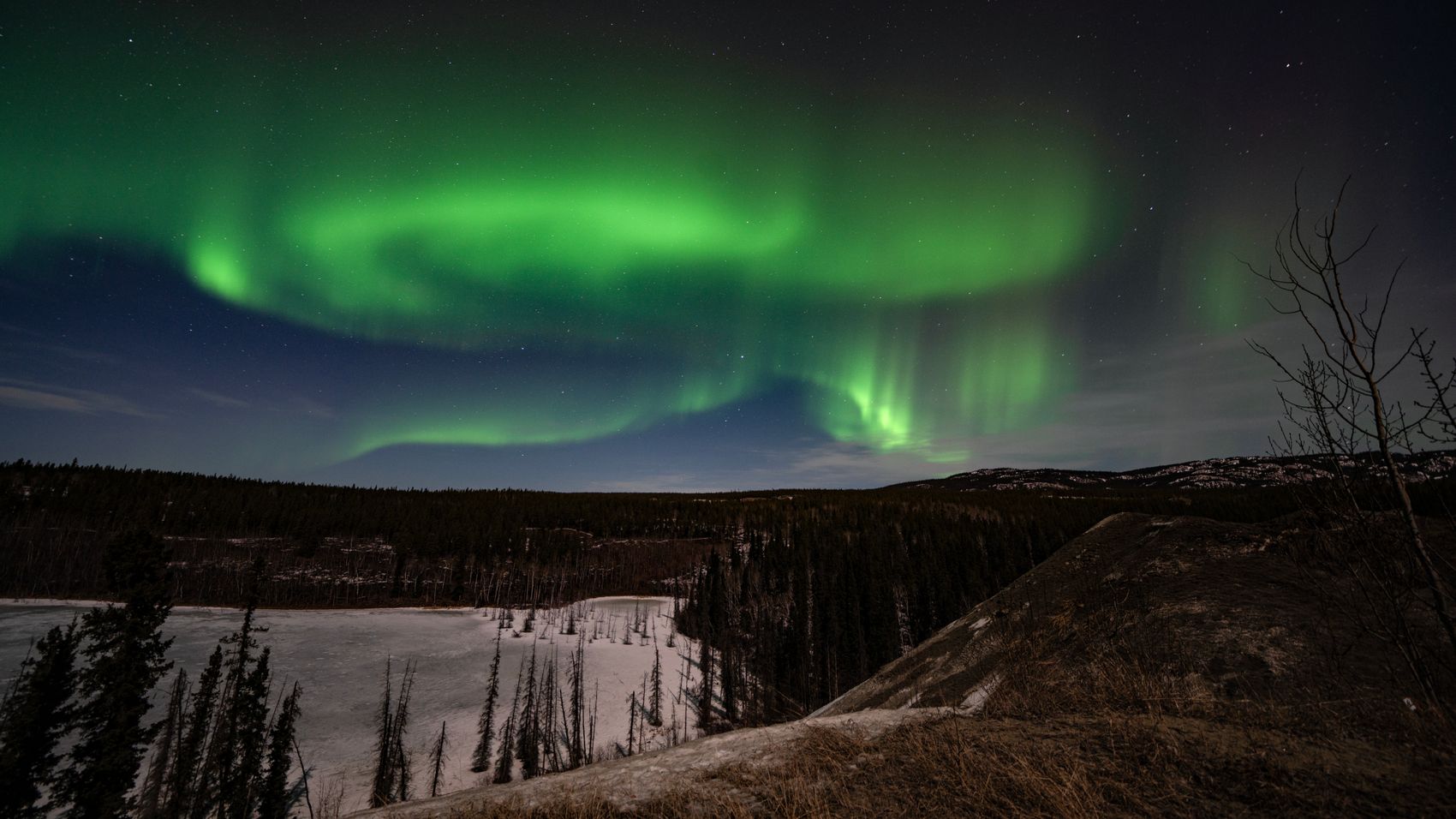
There are very few sights on Earth that rearrange your sense of scale the way the aurora borealis does. One moment the northern sky is simply black and full of stars; the next it is alive, with curtains of green and violet light rippling silently from horizon to horizon. The Yukon, sitting squarely beneath the band of maximum auroral activity known as the auroral oval, is one of the most reliable places anywhere on the planet to witness it. On a clear, dark night in the right season, your odds of a show are genuinely excellent — and this guide will help you stack them further in your favour.
When to go
The aurora is active all year, but you cannot see it when the sky is bright, and that is the single most important thing a first-timer needs to understand. From late May through mid-July the Yukon barely gets dark at all thanks to the midnight sun, which makes aurora viewing effectively impossible even when the lights are dancing above the daylight. The viewing season runs from roughly late August to mid-April, when nights are long and genuinely dark.
Within that window, two periods stand out. Late August and September pair long nights with relatively mild temperatures, open water for reflections, and the last of the autumn colour on the land. The deep winter months of December through March deliver the longest, darkest nights and the highest odds of a dramatic display, at the cost of serious cold. Whichever you choose, give yourself several nights in one area. The aurora is driven by solar activity and hidden or revealed by local weather, so a single night is a gamble; three or four nights turns the odds firmly in your favour.
Where to watch
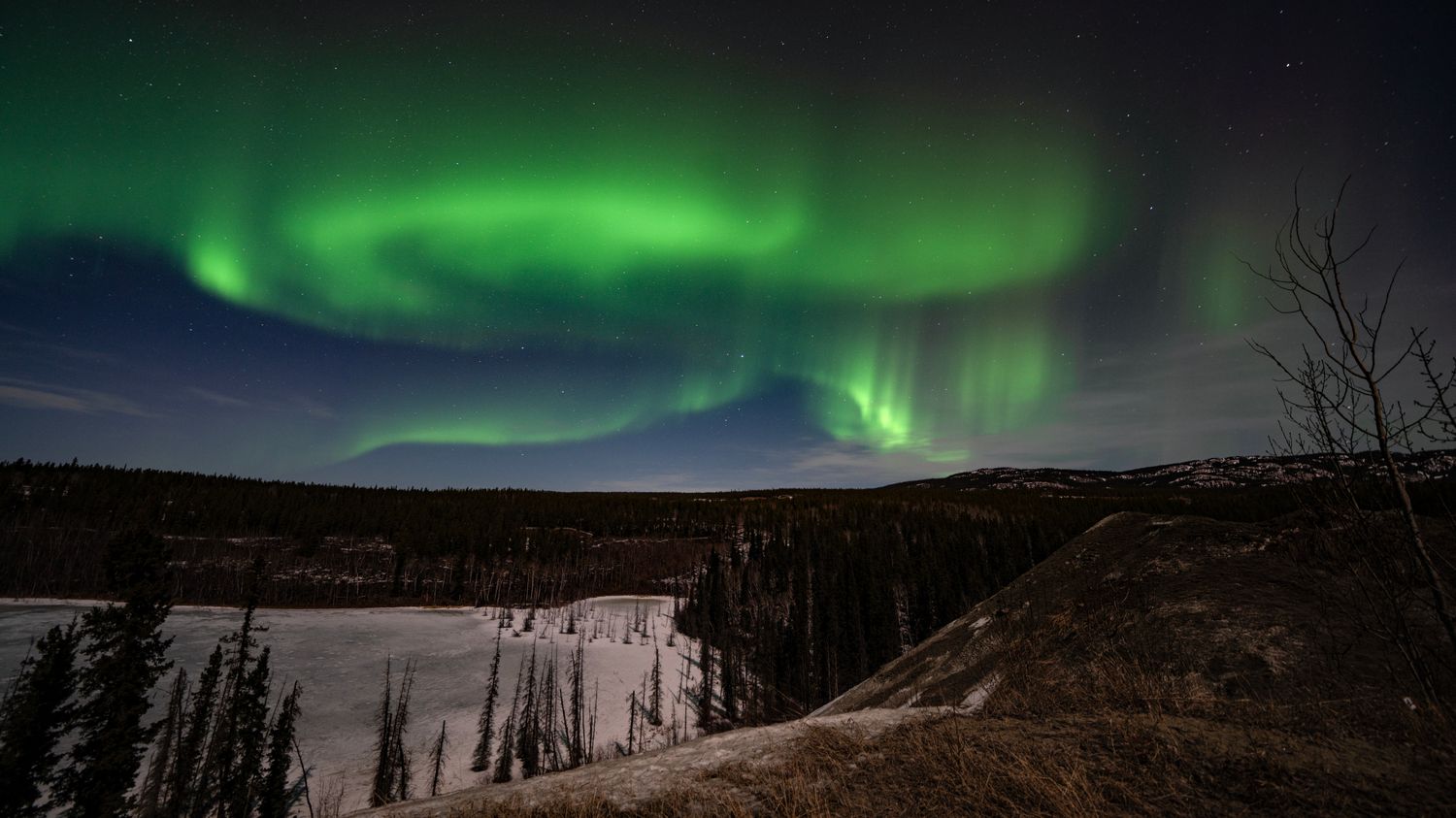
You do not have to travel far from Whitehorse to find good aurora country, but you do need to escape the glow of town lights. The hills on the edge of the city, the shores of Lake Laberge, and the wide-open Southern Lakes region around Tagish and Marsh Lake are all within an easy drive and offer the dark skies and unobstructed northern horizons you want. Further afield, Dawson City and the country along the Dempster Highway sit even deeper under the oval and reward those willing to make the journey.
Look for a spot with a clear view low to the north, since displays often begin as a faint arc hugging the horizon before climbing overhead. A frozen lake, a river valley, or a low ridge makes a beautiful foreground and gives photographs a sense of place. Avoid valleys hemmed in by tall trees or mountains that block the sky.
How to see more
Check an aurora forecast before you head out. The key number is the Kp index, a scale from 0 to 9 that estimates geomagnetic activity; the higher the Kp, the further south and the more vigorously the aurora is likely to appear. Pair a promising Kp reading with a clear-sky forecast and you have your green light. Many travellers also watch the real-time solar-wind data that space-weather agencies publish, which can hint at activity an hour or two ahead.
Patience is the other half of the equation. The aurora keeps its own schedule, and the best displays often arrive well after midnight. Dress far more warmly than you think you need to, because you will be standing still in the cold for hours rather than moving to keep warm. Insulated boots, a down parka, chemical hand warmers, and a thermos of something hot are not luxuries here; they are what separates a magical night from a miserable one.
Photographing the lights
A phone can now capture a respectable aurora using its night mode, but a camera with manual controls on a sturdy tripod will always do better. Start with a wide, fast lens, set your aperture as wide as it will go, push the ISO to somewhere between 1600 and 3200, and try an exposure of a few seconds — long enough to gather light, short enough to keep the curtains from smearing into a formless glow. Focus manually on a bright star, turn off the flash, and use a timer or remote so you are not shaking the camera. Bring spare batteries and keep them warm in an inside pocket, because cold drains them fast.
Making a night of it
If the idea of navigating dark backroads and reading space-weather charts sounds like more than you want to take on, let a local operator carry the load. Yukon guides run heated aurora-viewing camps outside Whitehorse and elsewhere, with wall tents, wood stoves, hot drinks, and photographers who know exactly where and when to point you. Some pair the wait with dog-sledding, snowshoeing, or storytelling so that even a quiet night still feels like an adventure.
However you choose to do it, resist the urge to spend the whole time behind a screen. Take your photographs, then put the camera down, tilt your head back, and simply watch. There is a reason people travel across the world and stand in the cold for hours on the strength of a maybe. When the sky finally opens up and the light begins to move, you will understand — and, like so many visitors before you, you may already be planning your return.