Step Back in Time: How to Spend 48 Hours in Dawson City
Boardwalks, saloons, and gold-rush history — a curated two-day Klondike itinerary.
Few places in Canada let you walk straight into the past the way Dawson City does. When gold was discovered on Bonanza Creek in 1896, word set off one of the largest and most frenzied gold rushes in history. Within two years a swamp at the mouth of the Klondike River had become, briefly, the largest city north of San Francisco, home to tens of thousands of dreamers, gamblers, merchants, and hangers-on. Most of them left as quickly as they came, but the town they built survived — and today it is a remarkably intact National Historic Site where the boardwalks still creak and the buildings still lean.
A town frozen in 1898
The first thing you notice in Dawson is that the streets are dirt and the sidewalks are wood. This is not set dressing; it is a practical response to permafrost, which heaves and shifts anything built on it. Whole rows of false-fronted buildings tilt at gentle angles, propped and preserved rather than straightened, so that the town looks much as it did when the rush was on. Parks Canada maintains many of the key structures and runs excellent guided walking tours that bring the characters and chaos of the era vividly to life.
Panning, dredges, and the goldfields
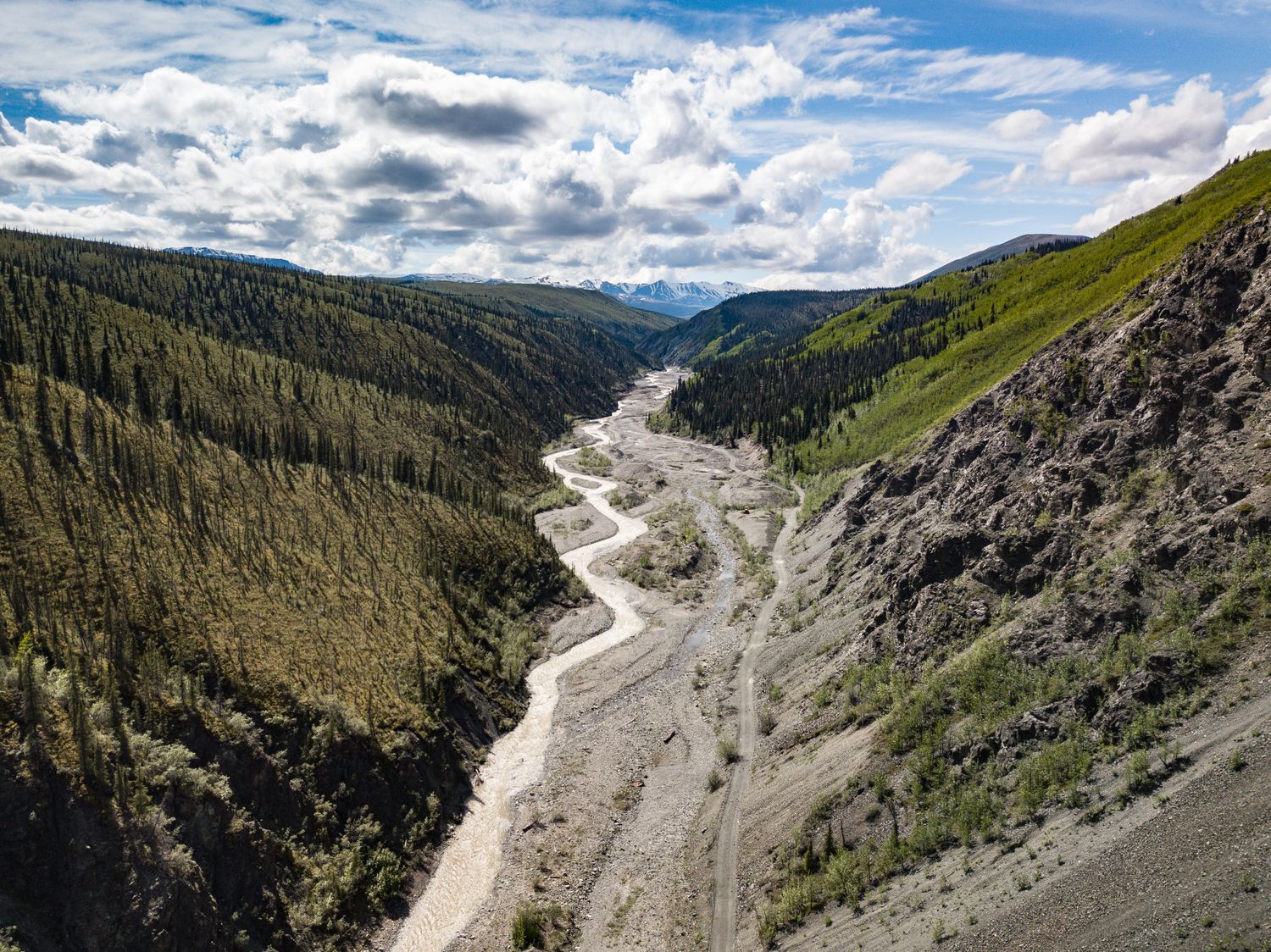
To understand Dawson you have to drive out to the goldfields that created it. Bonanza Creek Road leads to Discovery Claim, the very spot where the 1896 strike was made, now a quiet interpretive site along the creek. Nearby stands Dredge No. 4, a vast wooden gold dredge the size of an eight-storey building that once floated in its own pond, chewing through the valley floor and spitting out the tailings you see ridged across the landscape. Several operators will set you up with a pan and a patch of creek so you can try for colour yourself; finding even a few flecks of gold in the bottom of the pan is a thrill that connects you directly to everyone who ever knelt in this cold water hoping for more.
Climbing the Midnight Dome
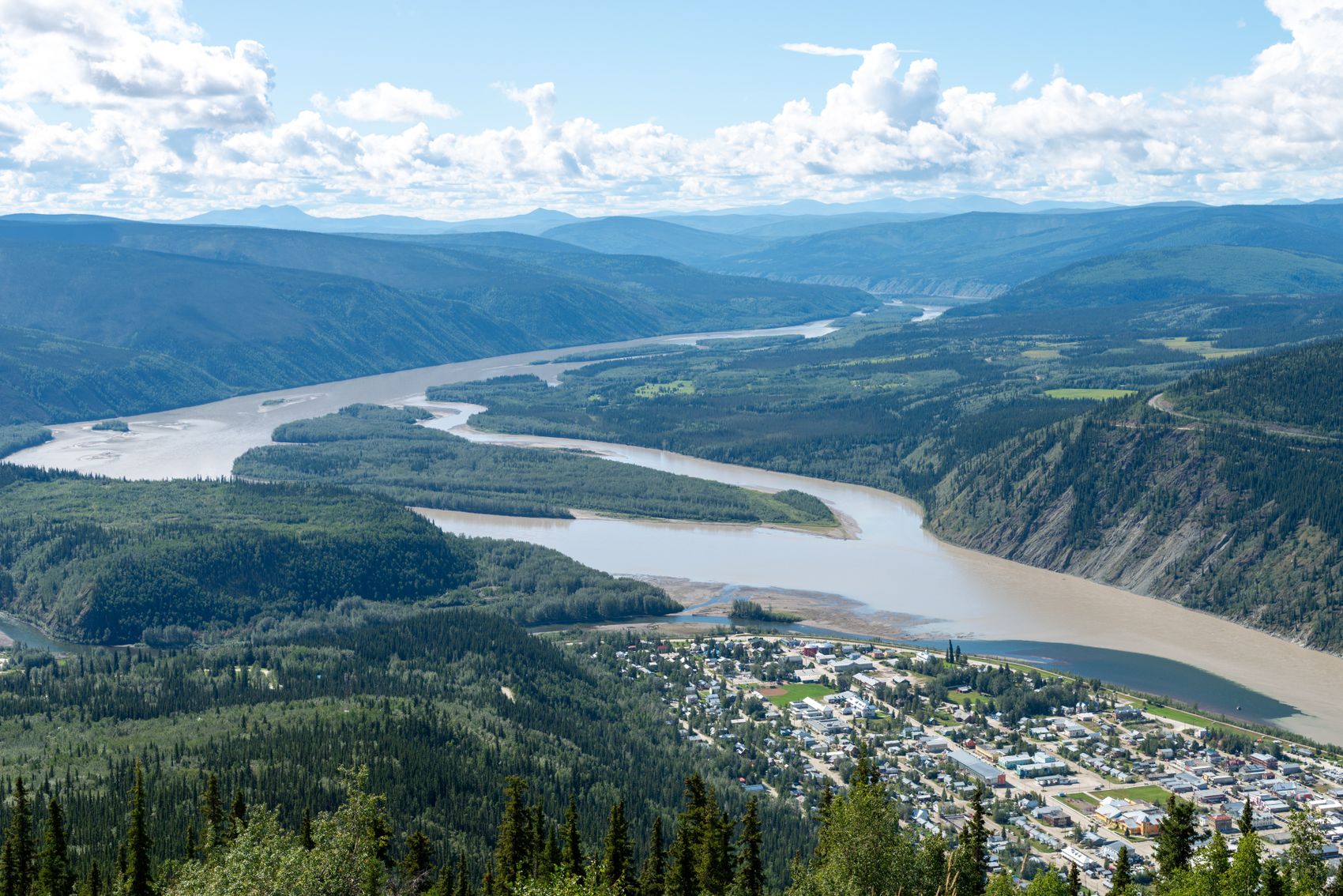
For the view that puts it all in context, make your way up the Midnight Dome, the hill that rises behind town. From the top you look down on the confluence of the muddy Klondike and the broad Yukon, out over the goldfields, and across a landscape that seems to roll on without end. On the summer solstice locals gather here to watch the sun refuse to set, and the name suddenly makes perfect sense.
Nights in Dawson
Dawson does not go quiet after dark, at least not in summer. Diamond Tooth Gerties, Canada’s oldest gambling hall, serves up nightly can-can shows and the clatter of roulette wheels in a room that feels lifted straight from the rush. The town’s bars and cafes fill with a mix of locals, seasonal workers, artists, and travellers, and conversations run long under the endless light. For the truly adventurous there is the Sourtoe Cocktail at the Downtown Hotel — a shot garnished with a genuine, preserved human toe, which you are invited to let touch your lips as you drink. Thousands have done it; you receive a certificate, and a story you will tell forever.
Culture beyond the rush
It would be a mistake to treat Dawson as only a gold-rush theme park. This is the traditional territory of the Tr’ondëk Hwëch’in, whose history here stretches back thousands of years before any prospector arrived, and whose cultural centre offers a deeper and more honest reading of the land. The town also nurtures a surprising arts scene, anchored by the Klondike Institute of Art and Culture and by the Dawson City Music Festival, which packs the summer streets with sound.
Making the most of a visit
Give Dawson at least two nights so you are not rushing between the town, the goldfields, and the Dome. Book accommodation well ahead in July and August, when beds are scarce. Bring layers, because even summer nights can turn cool, and cash for the smaller establishments. And leave time simply to wander — to follow a boardwalk to its end, to read the plaques, to strike up a conversation. Dawson rewards curiosity, and it has a way of getting under your skin. Many visitors arrive planning one night and find themselves rearranging their trip to stay another.