Où observer la faune en sécurité au Yukon (ours, orignaux et caribous)
Conseils clairs et responsables : où regarder et comment rester prudent.
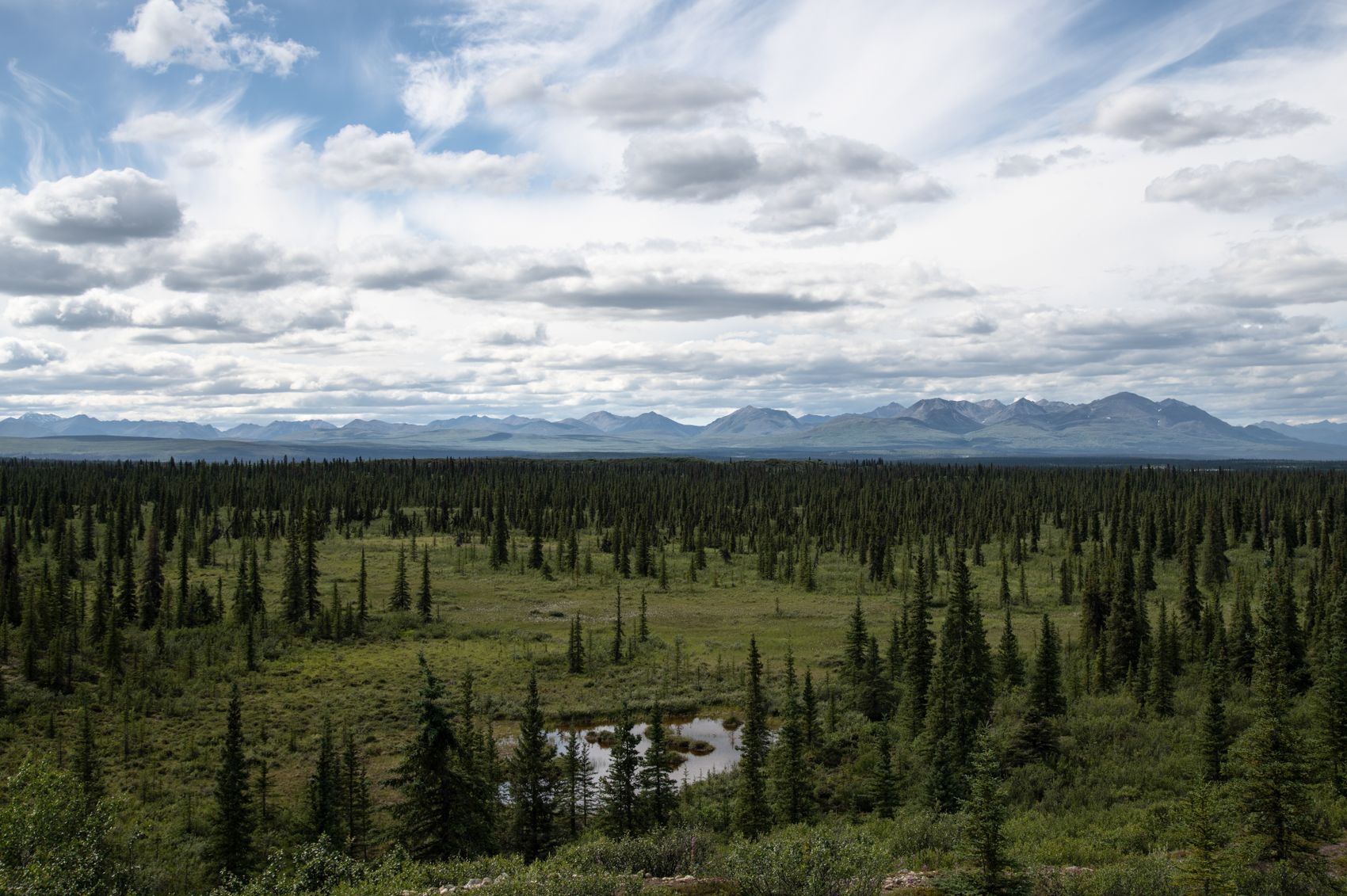
The Yukon has more wild animals than people, and it is one of the last places on the continent where you can reasonably hope to see large mammals living entirely on their own terms. Grizzly and black bears, moose, two kinds of caribou, Dall sheep, mountain goats, wolves, lynx, foxes, and a growing herd of wood bison all move across the territory, alongside trumpeter swans, bald eagles, and sandhill cranes overhead. Seeing them takes a little knowledge, a little patience, and a firm commitment to doing it responsibly — but the payoff is among the best wildlife watching in North America.
Bears
Both grizzly and black bears are widespread in the Yukon. Black bears favour forested country and are the ones most often seen ambling along roadsides in summer, feeding on new growth. Grizzlies range more widely, from river valleys to high alpine tundra, and are more commonly seen in open country where they dig for roots and ground squirrels or graze on berries in late summer. The single best rule for bear watching is distance: use binoculars or a long lens, never approach, never position yourself between a bear and its cubs or its food, and back away calmly if an animal notices you.
Caribou and the great migrations
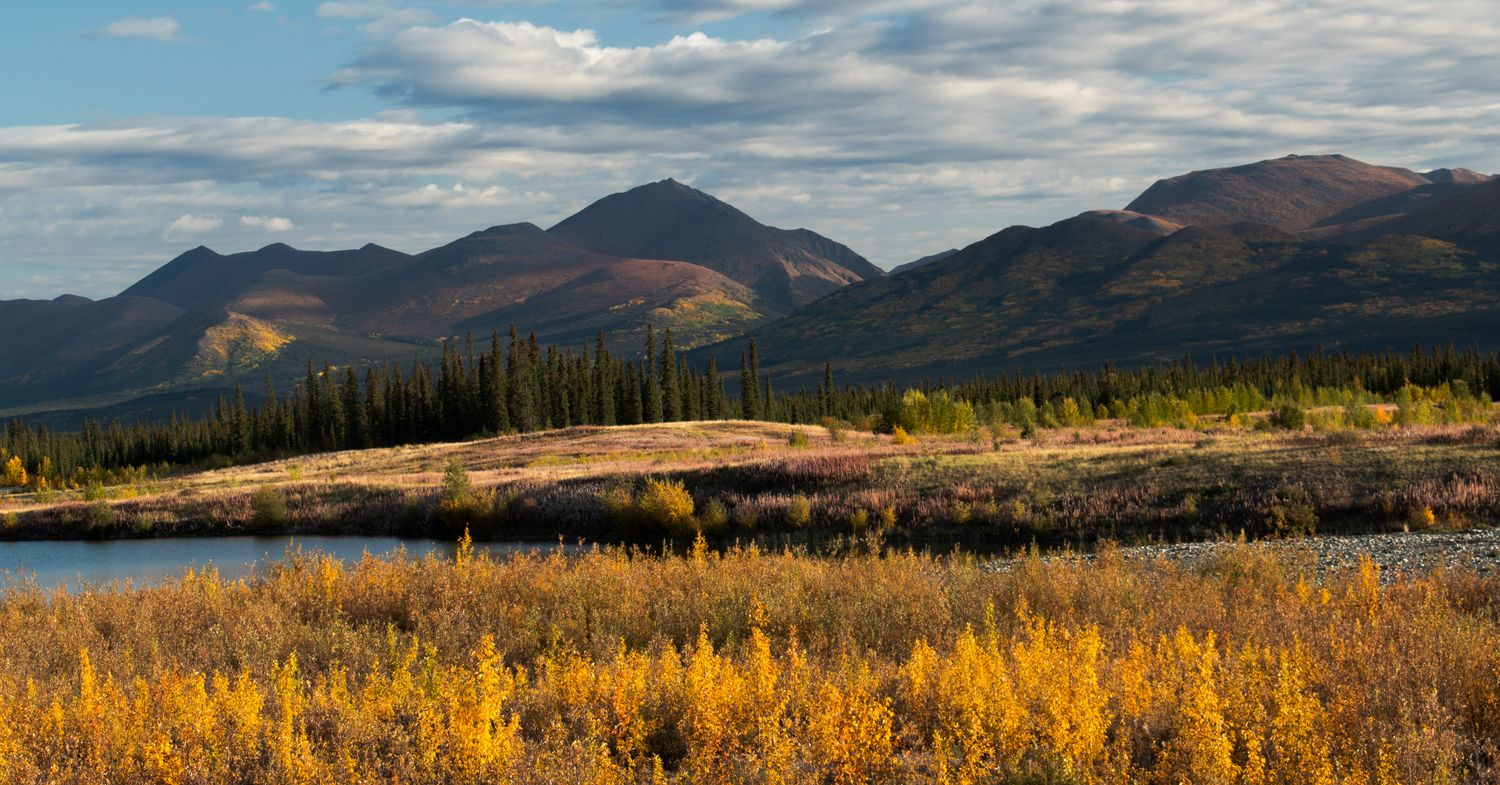
The Yukon is caribou country in the deepest sense. The famous Porcupine caribou herd, hundreds of thousands strong, migrates across the northern Yukon, and the Dempster Highway is the road most likely to put you within sight of them, particularly in spring and autumn as the herd moves. Woodland caribou range in smaller groups across the mountains further south. Timing and luck matter enormously, but few sights in the North rival a river of caribou flowing across the tundra.
Sheep, goats, and the high country
Kluane National Park’s Sheep Mountain — Tachäl Dhäl — is named for the Dall sheep that graze its slopes, and the visitor centre at its base is one of the most dependable places in the territory to spot the creamy-white animals through a spotting scope. Mountain goats cling to even steeper ground elsewhere in the southern ranges. Both are best watched from below with good optics; they are far more visible than you would expect once you learn to scan the green slopes for moving white dots.
Moose, wolves, and the forest
Moose, the largest members of the deer family, are common but often solitary and shy, seen most often at dawn and dusk feeding in shallow ponds, marshes, and roadside willows. Wolves are present across the territory but rarely seen; hearing a pack howl across a valley at night is a more likely and equally unforgettable encounter. Lynx and foxes turn up unpredictably, usually as a flash of movement crossing a road.
Where and when to look
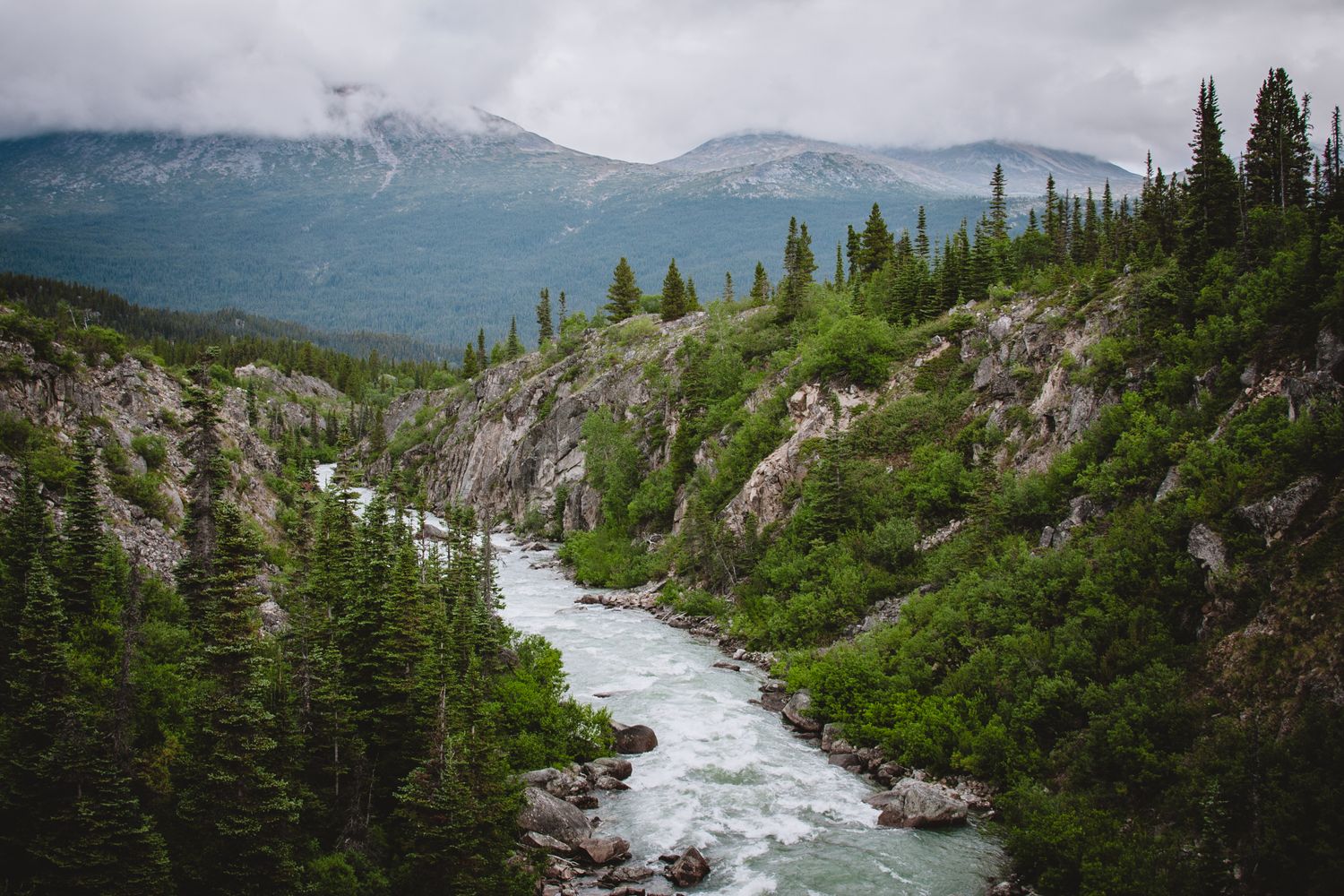
Roadsides are genuinely productive in the Yukon, so simply driving the highways slowly at dawn and dusk, with a pair of binoculars on the seat beside you, will turn up a surprising amount. The Dempster Highway, the Alaska Highway through Kluane, and the quieter secondary roads are all worth patient attention. Spring, when animals emerge hungry and green-up draws them to the roadsides, and late summer into autumn, when bears fatten on berries and caribou move, are the richest seasons.
Watching responsibly
Ethical wildlife watching is not just courtesy; in the North it is a safety issue and a conservation one. Keep a generous distance, never feed an animal or leave food accessible, and store food and scented items securely when camping. Carry bear spray on the trail, know how to use it, make noise in dense brush, and travel in groups where you can. A fed or habituated animal often becomes a dead animal, so the kindest thing you can do for the wildlife you came to see is to keep it wild.
A guaranteed sighting
If your schedule is tight or you are travelling with children, the Yukon Wildlife Preserve near Whitehorse offers a reliable, ethical alternative. Its large natural enclosures are home to muskox, bison, moose, caribou, Dall sheep, mountain goats, and more, and a walk or drive through the preserve all but guarantees close, unhurried views of species that can take days to find in the wild. Many visitors go early in their trip to learn what they are looking for, then head out into the backcountry with a far sharper eye.